
When Your Government Website Becomes the Problem
Every government website starts as a good idea. Then reality sets in.
Somewhere between the launch day ribbon-cutting and today, things went sideways. Staff can’t update content without emailing a vendor. Meeting agendas get posted late. Citizens call because they can’t find the form they need. And every week, a small but steady parade of frustrations reminds you that the platform you’re on was never built for public service in the first place.
That was life in Springerville, Arizona. And Town Clerk Kelsi Miller was ready for change.
Meet Springerville: A Community That Deserved Better
Nestled in the White Mountains of eastern Arizona, the Town of Springerville is home to approximately 1,700 residents who take their civic life seriously. Community markets, high school sports, town council meetings, and a genuine pride in where they live. For more than a decade, Kelsi Miller has been part of that story, rising from Finance Clerk to Town Clerk and watching the community grow.
“We have a really great community, leadership, and elected officials,” Miller said. “It’s great to be a part of this town’s growth.”
That growth deserved a digital home that could keep pace. What they had instead was a daily detour.
About our Client
CLIENT NAME:
CHAMPION:
Kelsi Miller
Town Clerk
POPULATION:
est. 1,720 residents
SOLUTIONS:
The Daily Detour: A Website That Created Work Instead of Solving It
Springerville’s former website hosting vendor had one fundamental problem: they did not specialize in government. That single gap created a cascade of operational failures that touched every department and every resident interaction.
The Three-Step Update Trap
Every content change in Springerville required a three-step relay race. A staff member identified what needed updating. They emailed Miller. Miller forwarded it to the vendor. The vendor may or may not have made the change that day. For a municipal office with legal posting deadlines and time-sensitive community alerts, this was not a workflow. It was a liability.
Meeting agenda posting requirements carry real legal weight for local governments. Missing those windows created compliance exposure that no town council wants to explain. When a water main breaks or a road closes, a website that cannot be updated in real time is not a communication tool. It is a trust problem.
A Platform Built for Businesses, Not Government
The existing site lacked the modules that define a functional government website: digital forms, online application processing, GIS integration, and citizen self-service. The platform was designed for small business use cases, and it showed.
The result was a form process that belonged in 2005. Residents downloaded a PDF, printed it, completed it by hand, scanned it, and emailed it back. Every transaction that could have taken 60 seconds online became a multi-step ordeal that frustrated citizens and required manual data entry for staff.
A Visual Identity That Undermined Credibility
Beyond functionality, the site’s design was working against the town’s reputation. Bright, overwhelming colors projected the wrong kind of energy for a municipal portal. Miller fielded regular calls from residents who had tried the website first, hit a broken link or dead end, and given up. The site was not just failing residents. It was reflecting poorly on town leadership.
The Gamechanger: A CMS Built Specifically for Government Operations
When Springerville partnered with MCCi to build a new government website, the goal was not simply a fresh coat of digital paint. The goal was a platform that understood what public sector operations actually require: compliance-grade content management, citizen-first self-service, role-based staff controls, and design that communicates institutional credibility.
The results arrived fast and stayed.
Compliance Is Now Automatic, Not Accidental
Springerville’s new MCCi Government Website includes automated systems for posting meeting agendas and minutes on schedule. Town council members noticed the difference immediately. So did residents who had learned to rely on the site for civic updates. Legal posting deadlines are now met consistently without anyone in the clerk’s office manually chasing the vendor.
Emergency communications, utility alerts, and road closure notifications can be posted by authorized staff in real time. The site that once could not respond to a broken water main is now the town’s first line of community communication.
Citizens Self-Serve. Staff Get Their Time Back.
The redesigned site features a strategic Quick Links section that directs residents to the forms, documents, and services they use most. A built-in Forms Center allows citizens to engage with other municipal services digitally, with automated routing to the appropriate department.
The outcome was a measurable shift in how residents interact with the town. Phone call volume to town offices dropped significantly as residents began handling routine requests online rather than calling. Staff members who previously spent hours fielding repetitive information requests are now focused on the complex, human-centered work that actually requires them.
Role-Based Access Means No More Bottlenecks, No More Mistakes
The new content management system gives department heads direct editorial access to their own pages through a role-based permissions structure. Departmental content stays current because the people who own it can update it directly. Critical information, fee schedules, legal notices, and formal records remain protected from accidental edits.
This distribution of content responsibility eliminated the single point of failure that had cost Springerville so many missed deadlines. The clerk’s office is no longer the mandatory middleman for every update.
A Website the Town Is Proud to Share
Perhaps the most telling signal of success: town staff now direct residents to their website without hesitation. Clean navigation, professional design, and reliable functionality communicate the same commitment to excellence that the Springerville team brings to their public service every day.
“We’re super proud of this website,” Miller said.
That pride is not a vanity metric. Resident trust in local government is earned through consistent, quality interactions. A website that works is an infrastructure investment in that trust.
Is Your Government Website Holding Your Community Back?
The gap between what Springerville had and what it needed is not unusual. It is the daily reality for hundreds of municipal offices operating on platforms that were never designed to meet compliance requirements, citizen service demands, or the operational workflows of local government.
The question worth asking is not whether your current site has problems. It is whether those problems are creating legal exposure, eroding resident trust, or consuming staff time that is meaningful to public service.
If the answer to any of those is yes, the detour has gone on long enough.
MCCi Government Websites are designed for exactly this kind of operation, from small towns like Springerville to larger city governments managing complex departmental structures. The platform handles compliance requirements, citizen self-service, staff usability, and integration demands that general-purpose CMS tools were simply not built for.
More good days start with the right infrastructure. Let’s build yours.
See it in Action
The Features Government Needs:

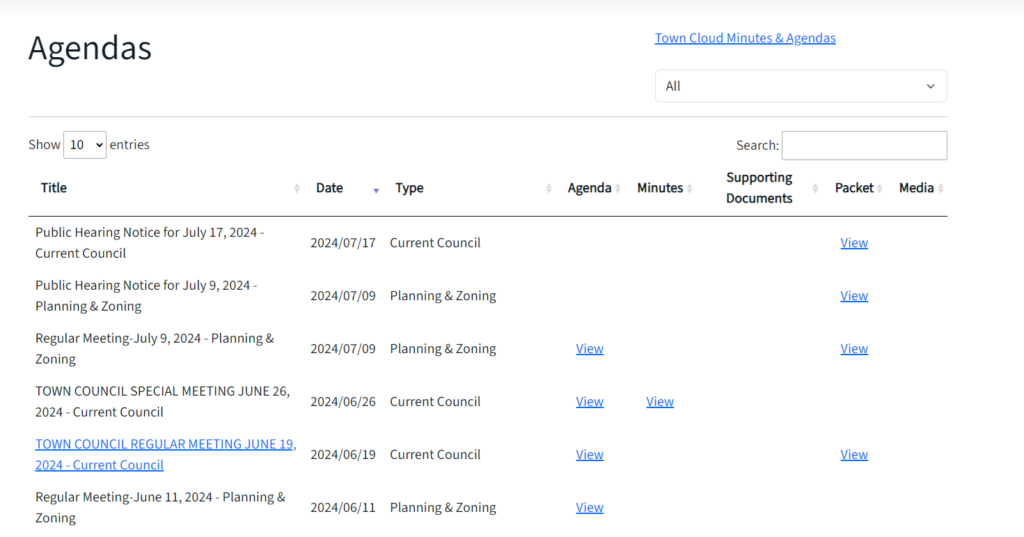
Springerville’s websitee has all the government-specific modules that their old site lacked.
Gone are the days of meeting agendas and minutes not making it onto the site before the deadline.
“I think that’s probably where I’ve got the most positive feedback is on our agendas and minutes page. The Council likes it. The community likes it. It just makes it easy,” Kelsi said.
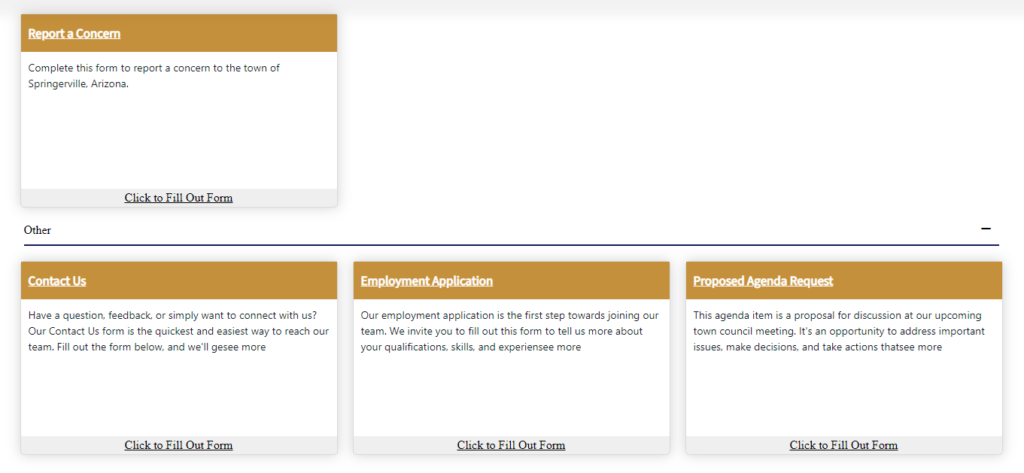
Citizens no longer have to email her forms about issues like code compliance or agenda requests. They can all get in touch through the Forms Center. The completed forms are automatically routed to the right staff member.
The new site design makes it easy for residents to find information and complete transactions.
In addition to the main navigation menu, the site has large, easy-to-locate “Quick Links” to their most frequently visited pages.
“It’s completely slowed down on my call volume. Can you send me this form? Can you send me this, this, this, and this?’ Because now they can find it on the site.”

Not only does Kelsi have full control over the site’s content, she’s also saving time by giving department heads the ability to maintain their own pages. But that doesn’t mean everyone has unlimited access to the site.
“I don’t have to worry about ‘oops,’ like someone accidentally changing the fee schedule. Departments only have access to what they need access to,” Kelsi said.